Swing-Arm vs. Tilt-Back Tire Changers: Which is Best for Your Auto Shop?
Let’s talk about your tire bay. Changing a standard 16-inch steel wheel is easy money. But what happens when a customer rolls in with a set of 20-inch low-profile run-flats on expensive alloy rims?
If your techs are sweating, wrestling with pry bars, and terrified of scratching a $1,000 rim, your tire machine is costing you money.
Upgrading your tire changer is a massive step up in shop efficiency. But as you browse the catalogs, you are immediately faced with the big industry debate: do you buy a traditional Swing-Arm machine, or upgrade to a Tilt-Back model?
Let’s break down how these two designs actually perform on the shop floor so you can protect your customers' wheels and speed up your turnaround times.
1. The Swing-Arm Tire Changer: The Compact Workhorse
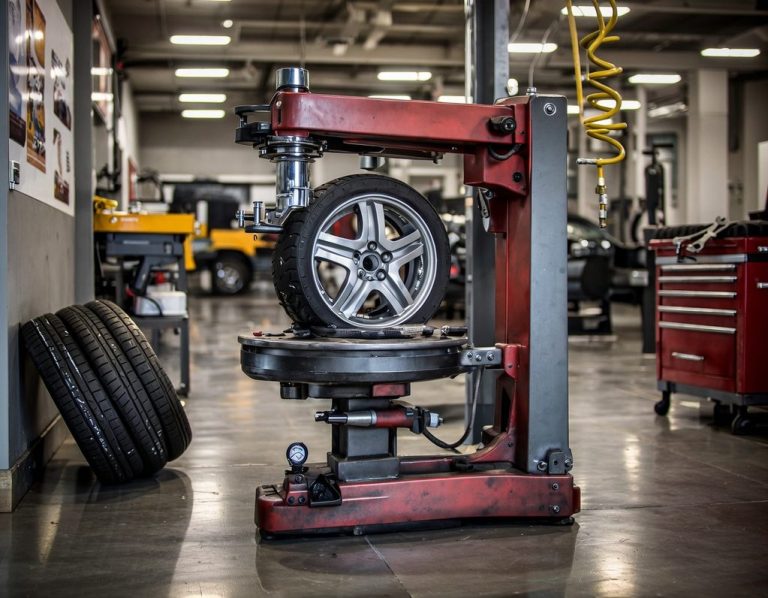
The swing-arm is the most common tire changer you'll see in entry-level or general repair shops. The mounting arm swings horizontally from the right side to position the duckhead over the rim.
Why it works for your shop:
They are incredibly durable, easy to use, and—most importantly—they are compact. Because the arm swings to the side, you can push this machine flush against a wall, saving valuable floor space in a tight bay. They are also generally more affordable.
The Drawbacks:
Every time you mount a new wheel size, the technician has to manually adjust the height and depth of the duckhead. It only takes a few seconds, but if you are doing high-volume tire work, those seconds add up. Also, the horizontal arm can sometimes flex slightly on extremely stiff run-flat tires.
2. The Tilt-Back Tire Changer: The High-Volume Standard
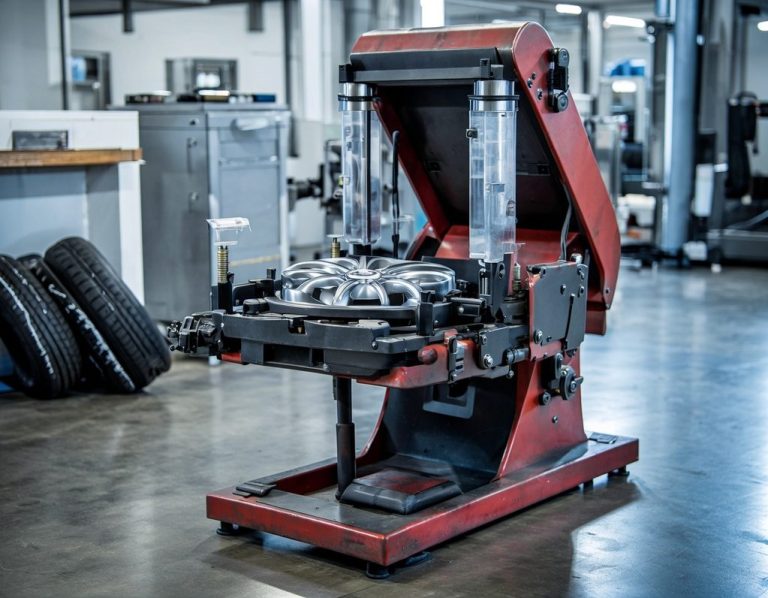
If you visit a dedicated tire shop or a high-end dealership, you will see tilt-back machines. Instead of swinging to the side, the entire vertical tower tilts backward pneumatically with the push of a foot pedal.
Why it works for your shop:
Speed and rigidity. Once your tech locks the duckhead into the perfect position for a rim, it stays locked. When they hit the pedal, the tower tilts back to remove the tire. When they hit it again, it tilts forward to the exact same position for the next wheel. If you are doing sets of four identical wheels, this saves a massive amount of time. The rigid tower also prevents any flexing, meaning zero chance of the duckhead scraping an expensive rim.
The Drawbacks:
They are more expensive. Furthermore, because the heavy tower tilts backward, you cannot place this machine against a wall; it requires significantly more floor space.
3. The Dealbreaker: Do You Need an Assist Arm?
Whether you choose a swing-arm or a tilt-back, we need to address the elephant in the room: modern tires are incredibly stiff.
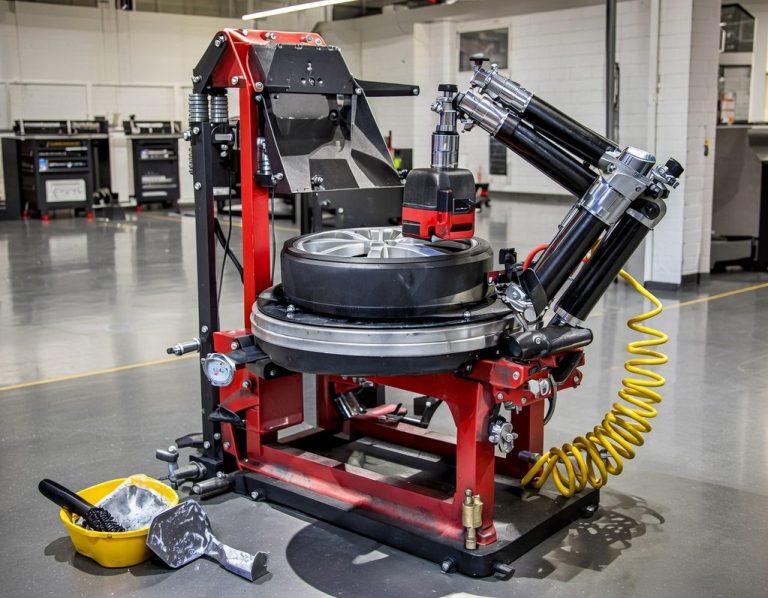
If your shop plans to service run-flat tires, low-profile tires, or large truck tires, an Assist Arm (also known as a Third Arm or Helper Arm) is 100% mandatory. This is a pneumatic roller/press block that pushes the stiff tire bead down into the drop-center of the rim while the turntable rotates.
Without an assist arm, your techs will be fighting the tire with pry bars, risking injury and rim damage. Never buy a commercial tire changer in 2026 without an assist arm if you want to service modern vehicles.
4. Quick Comparison: Shop Floor Reality
Base your purchase on your shop's daily volume and floor space.
Choose a Swing-Arm if: You have a smaller general repair shop, floor space is limited, and tires are only a portion of your weekly revenue. It’s a reliable, cost-effective workhorse.
Choose a Tilt-Back if: You are a high-volume tire center or you frequently work on high-end luxury vehicles. The locked-in precision and speed will pay for the machine in labor savings alone.
Ready to upgrade your tire bay and stop wrestling with stiff run-flats?