Rotary Screw vs. Piston Air Compressors: Which is Best for Your Auto Shop?
Air is the lifeblood of your shop. If your air compressor goes down, your impact wrenches stop, your paint guns spit out bad finishes, and your mechanics end up standing around. In short: when the air stops, the money stops.
If your shop is growing and your old compressor is running non-stop just to keep up, it's time for an upgrade. But when you start looking at commercial equipment, you are immediately hit with the big debate: do you stick with a traditional Piston (Reciprocating) compressor, or is it time to invest the big money into a Rotary Screw compressor?
Let’s cut through the sales brochures and look at how these two technologies actually perform on the shop floor, and which one will give you the best ROI.
1. The Piston (Reciprocating) Compressor: The Old Reliable
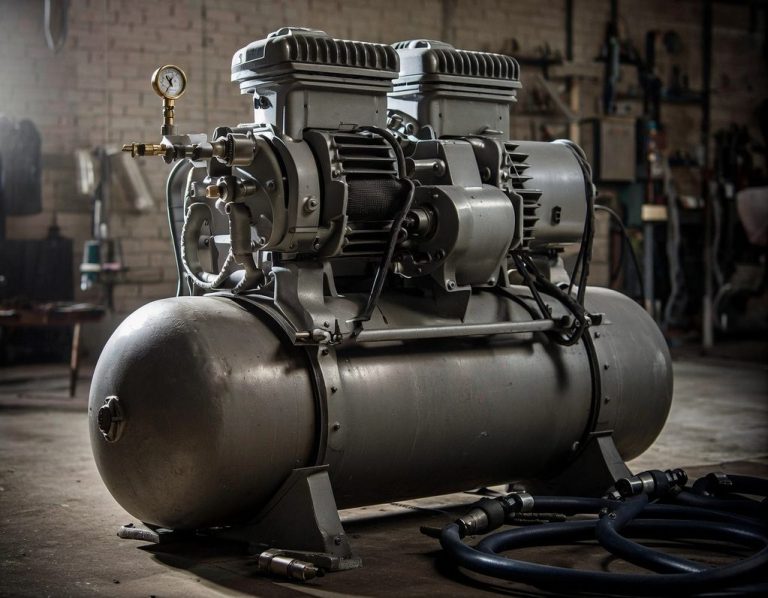
Piston compressors are the loud, thumping tanks you are probably used to seeing in the corner of every independent garage. They work just like a car engine: a piston moves down to draw air in, and moves up to compress it into the holding tank.
The Pros for Your Shop:
- Lower Upfront Cost: This is the biggest selling point. You can get a massive 80-gallon, 2-stage commercial piston compressor for a fraction of the cost of a rotary screw.
- Cheaper Maintenance: Mechanics understand pistons. Changing the oil and replacing air filters is cheap, easy, and can usually be done in-house without calling a specialized technician.
The Cons (The "Duty Cycle" Problem): Piston compressors generate a lot of heat and friction. Because of this, they usually have a 60% to 70% Duty Cycle. This means they cannot run continuously. If you run a piston compressor non-stop for hours (like when running dual DA sanders in a body shop), it will overheat, push massive amounts of water into your air lines, and eventually burn out the pump. They are also incredibly loud.
2. The Rotary Screw Compressor: The Modern Powerhouse
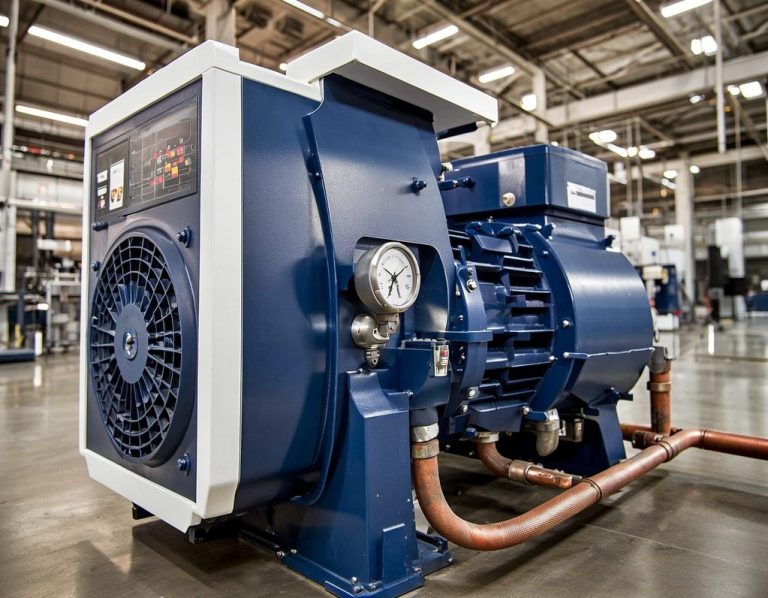
Instead of pistons, these compressors use two interlocking helical screws that continuously push and compress air. They are the premium standard for modern, high-volume facilities.
The Pros for Your Shop:
- 100% Duty Cycle: This is the game-changer. A rotary screw compressor is designed to run all day, every day, without stopping or overheating. If you run a high-volume paint booth or have 10 mechanics running air tools simultaneously, this machine won't break a sweat.
- Quiet Operation: You can literally stand next to a running rotary screw compressor and have a normal conversation. This drastically improves the working environment for your techs.
- Cleaner, Drier Air: They run cooler, which means less condensation in your air lines—an absolute must for automotive painting.
The Cons:
- High Initial Investment: Be prepared for sticker shock. A good rotary screw setup (especially one with an integrated air dryer) will cost significantly more upfront than a piston unit.
- Strict Maintenance: You can't neglect these. They require specialized synthetic oil changes and separator replacements, which often require a contracted service tech.
3. Quick Comparison: The Shop Floor Reality
The Deciding Factor: Your Shop’s CFM Demand
Don't buy a rotary screw compressor just to flex. Base your decision on your shop's actual CFM (Cubic Feet per Minute) demands.
Choose a Piston Compressor if:
You run a standard repair shop where air usage is intermittent (taking off lug nuts, using blow guns, inflating tires). If your compressor has time to rest and cool down between jobs, a heavy-duty 2-stage piston unit is all you need.
Choose a Rotary Screw Compressor if:
You run an auto body shop with continuous sanding and painting, or a massive fleet facility where air tools are running constantly. In these environments, a piston compressor will die quickly, making the expensive rotary screw the much cheaper option in the long run.
Don't buy a rotary screw compressor just to flex. Base your decision on your shop's actual CFM (Cubic Feet per Minute) demands.
Choose a Piston Compressor if:
You run a standard repair shop where air usage is intermittent (taking off lug nuts, using blow guns, inflating tires). If your compressor has time to rest and cool down between jobs, a heavy-duty 2-stage piston unit is all you need.
Choose a Rotary Screw Compressor if:
You run an auto body shop with continuous sanding and painting, or a massive fleet facility where air tools are running constantly. In these environments, a piston compressor will die quickly, making the expensive rotary screw the much cheaper option in the long run.
Ready to upgrade your shop's air system and eliminate downtime? Now that you know which technology fits your daily volume, it's time to look at the best models on the market.